DDX Miami ’26 · Conference Report
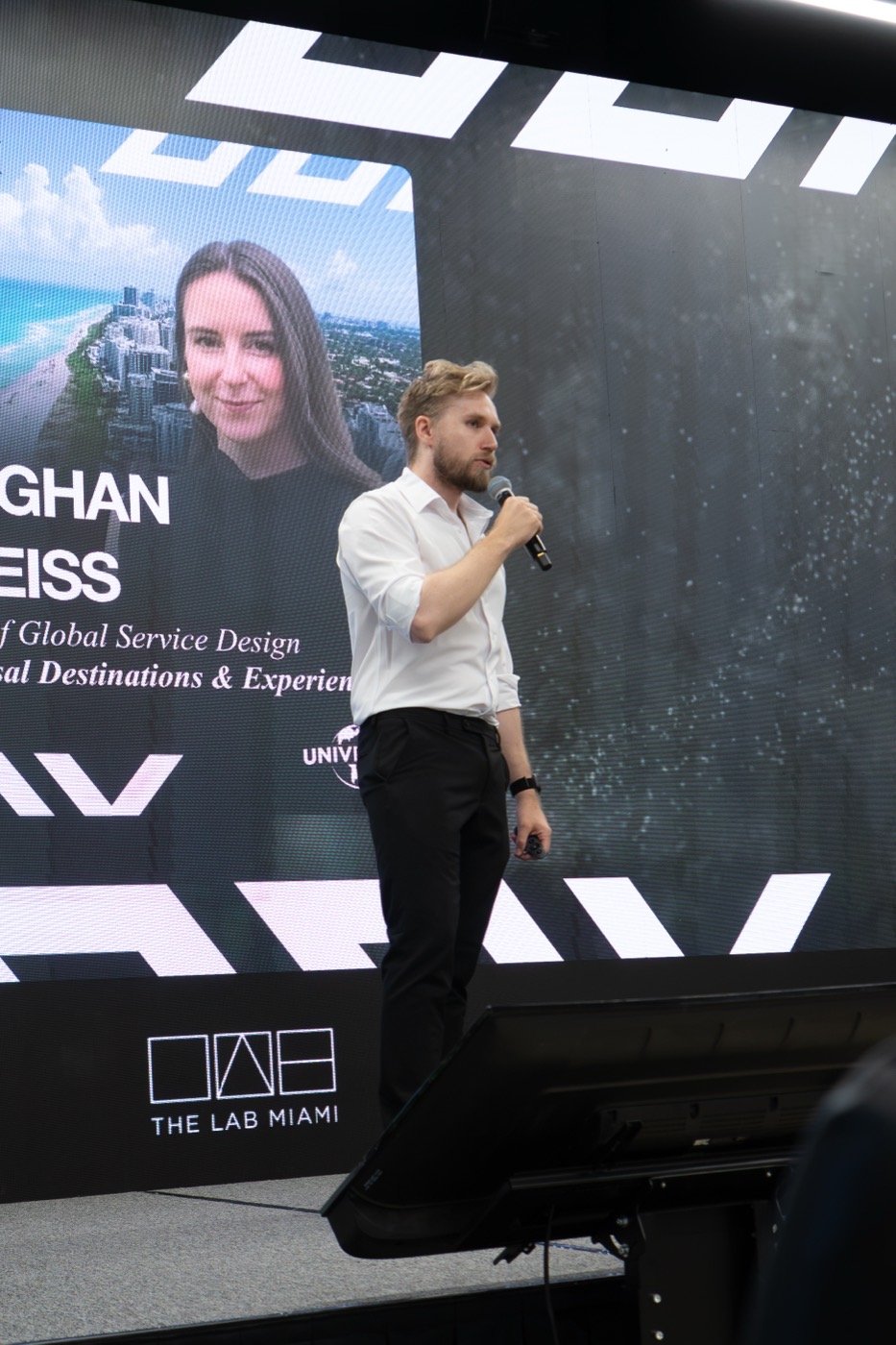
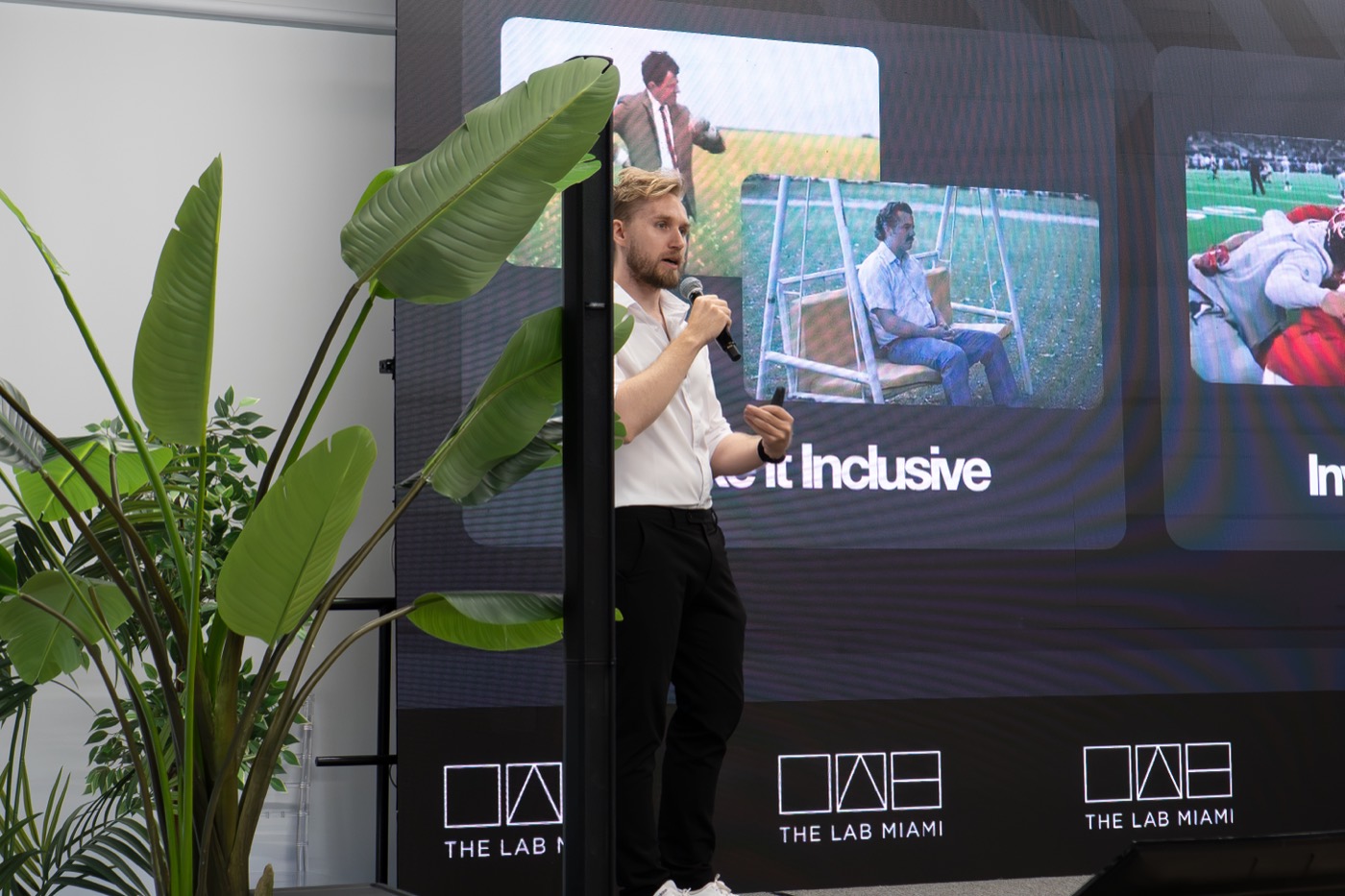
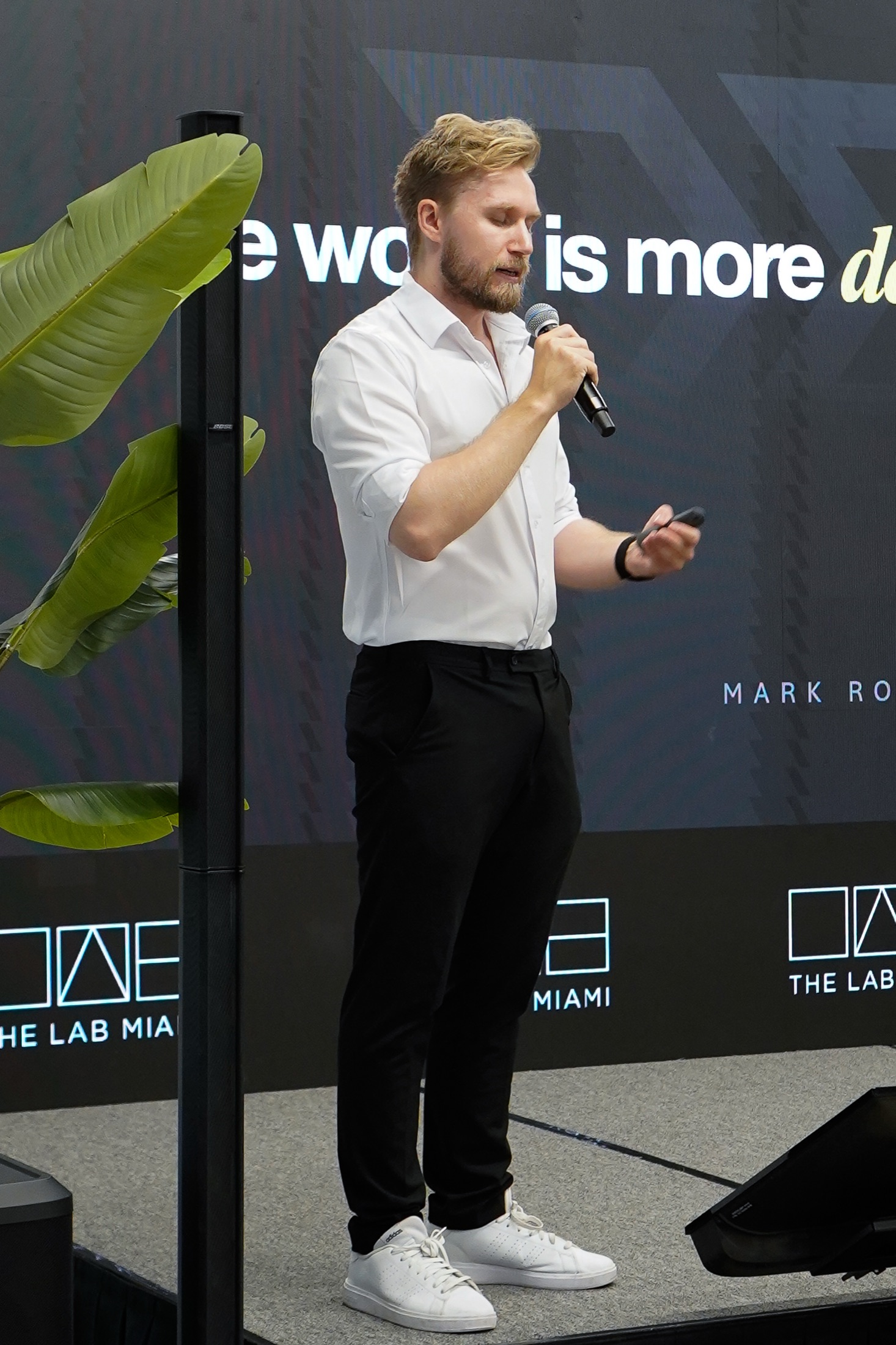
Sebastian Gier opening DDX'26 Miami on the main stage at The LAB Miami Photos · DDX Miami
Conference report24–25 September 2026

TheInflectionPoint

DDX’26 Miami The LAB Miami · University of Miami Design & Product Leaders Exchange on the Future of Digital Innovation
← Back to the DDX Miami page
In brief

Two days, one city, one question

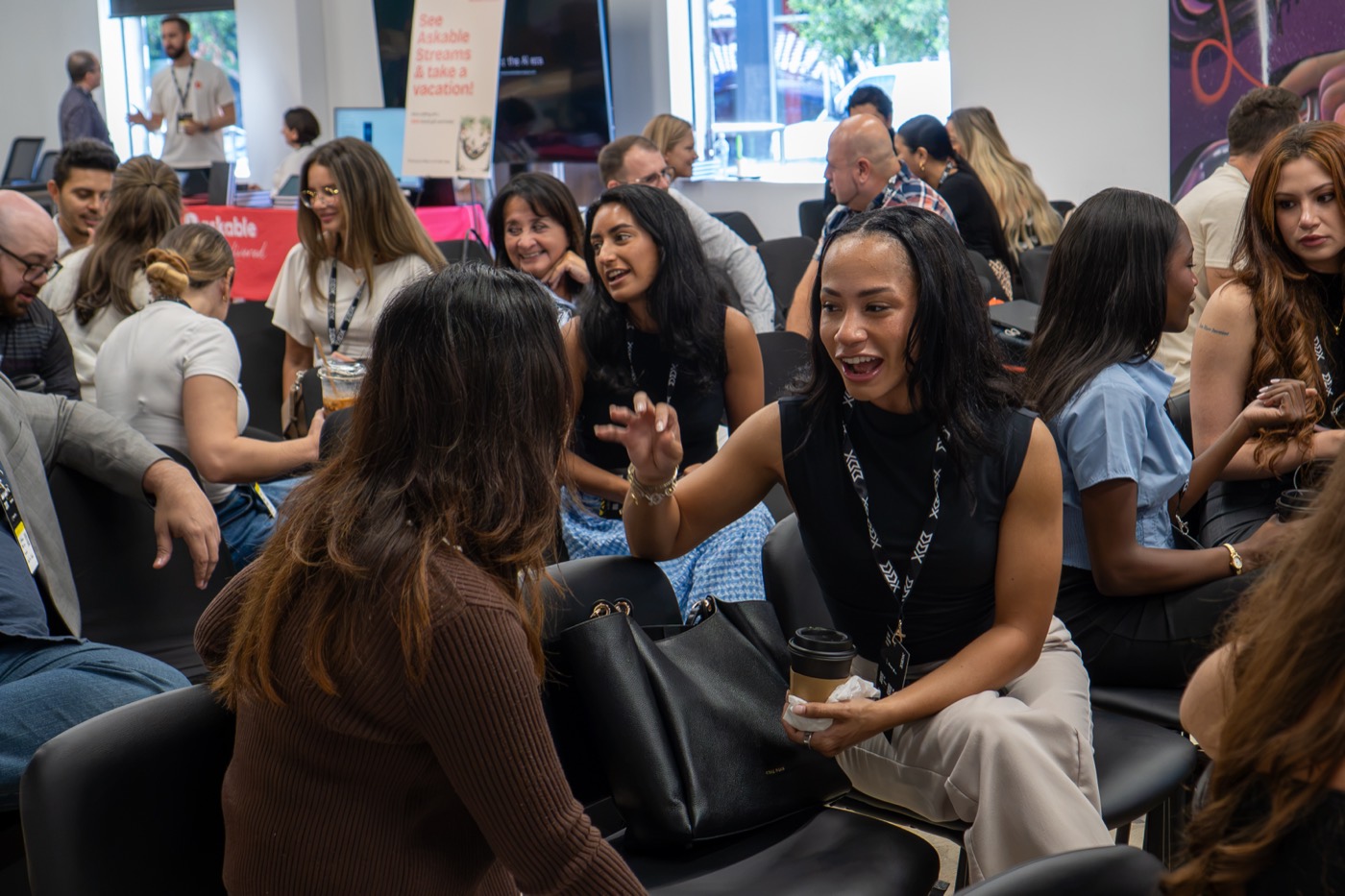
If every competitor runs on the same AI, what makes yours worth choosing? DDX’26 Miami put that question to nineteen speakers from Google DeepMind, Medium, Adobe, Amazon, Docusign, American Express, Universal Destinations & Experiences, Brain Technologies, Askable, Citi and Miami’s own design community, and to a room that answered back at every table.

The day opened on Thursday evening at the University of Miami, where three design leaders unlearned leadership in disruptive times. It continued on Friday at The LAB Miami: seven talks, two panels, two hands-on workshops and six table talks, closing with a keynote on the last screen and a room that stayed for the after-event.

The answer that emerged was consistent from the first slide to the last: AI makes everything personal, and personal isn’t human. When the models, the vendors and the metrics are the same, difference lives in judgment, in the tensions a team chooses to hold, and in the room a service leaves for a person to do the unscripted thing. Design’s job is moving upstream, closer to the decision.

19Speakers on stage
2Days · two venues
3Panels
2Workshops
6Table talks
1Digital keynote from London
100+Leaders in the room
4,000+DDX alumni worldwide
What the room agreed onFive threads, with the 2026 evidence behind them

Personal isn’t human.

Same models, same vendors, same data. Difference is the value.

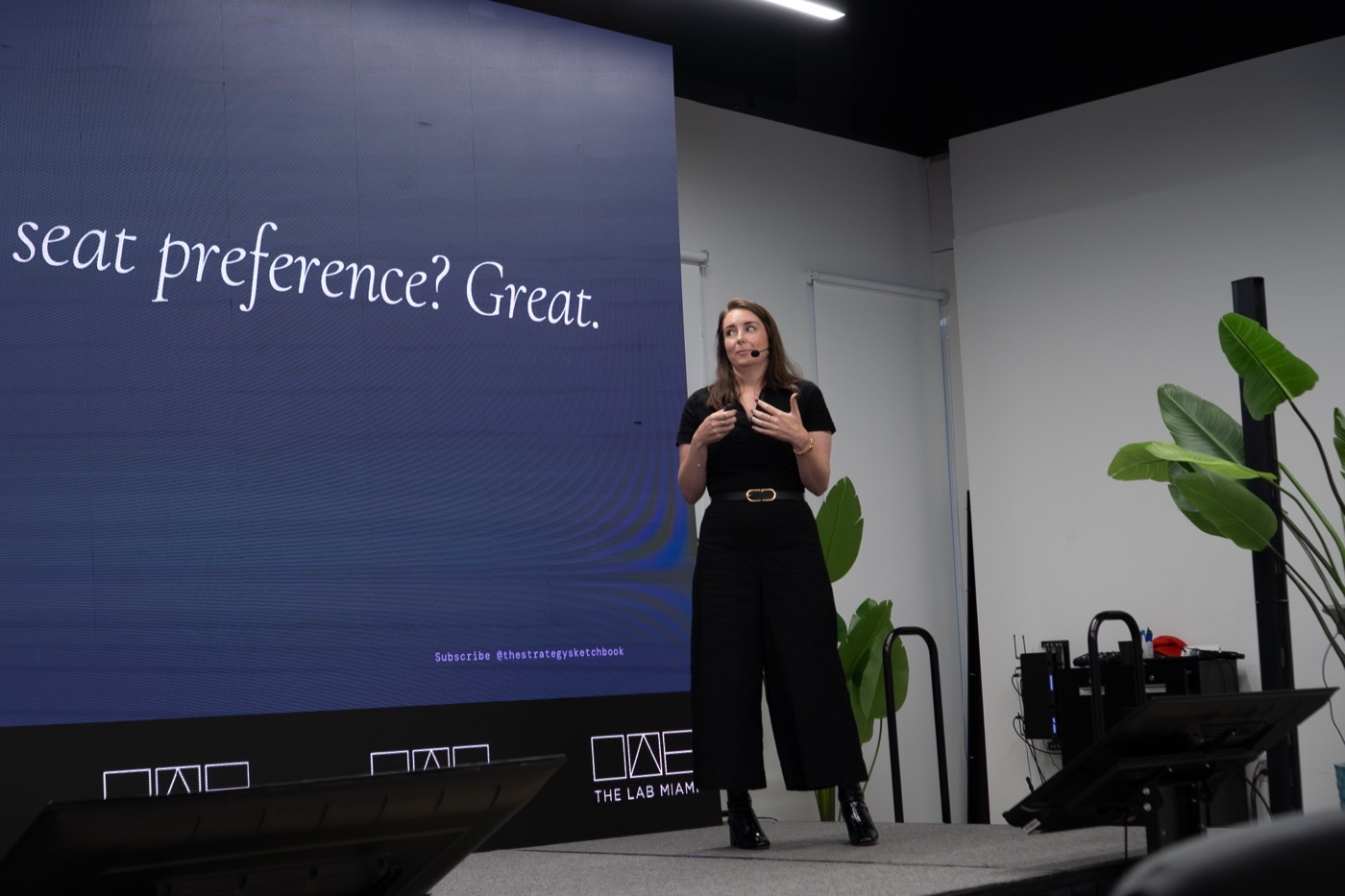
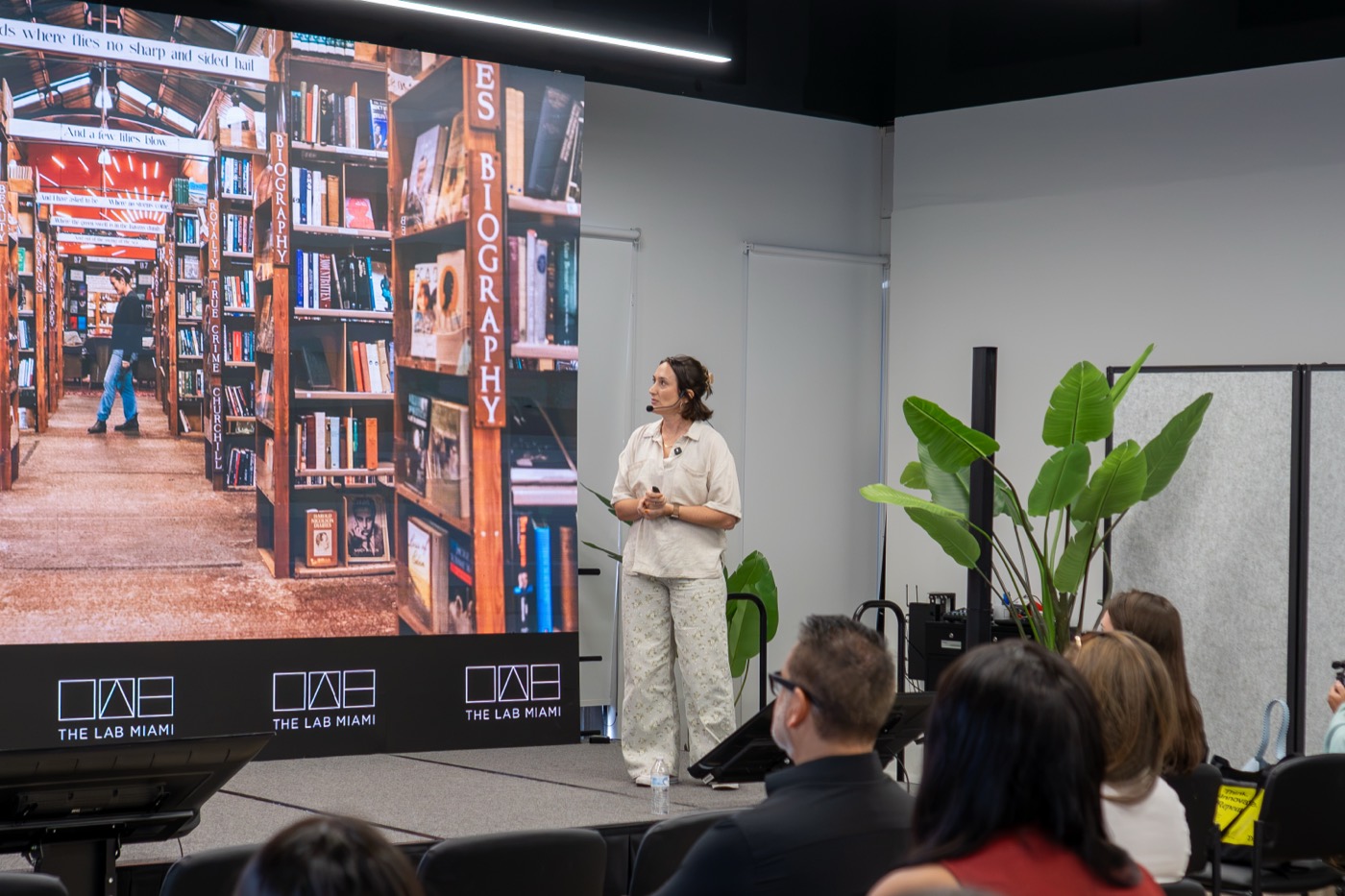
Meghan Preiss opened the main stage with a man running through an airport in his socks and a pilot who waited twelve minutes: nobody designed that, somebody left room for it. Her argument ran through the whole day: AI makes every service individually better and collectively the same, personalisation is a mail merge with better manners, and when sameness is cheap, difference is the value. Difference lives in interaction, in the tensions a company chooses to hold rather than resolve toward the metric, and in the emotions no script asked for. Let the machines be personal. Let people be human.

Feel it. Design belongs closer to the decision.

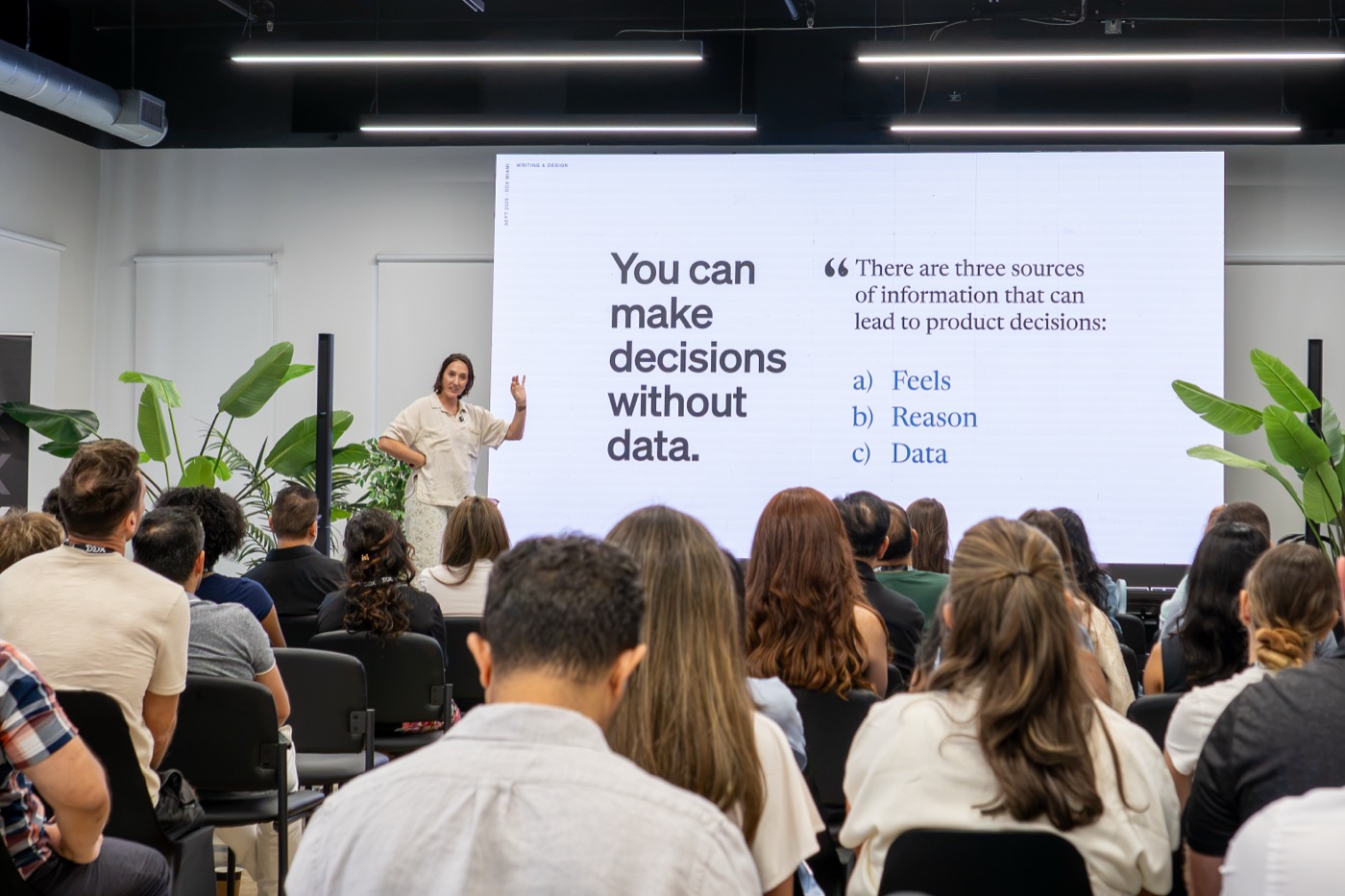
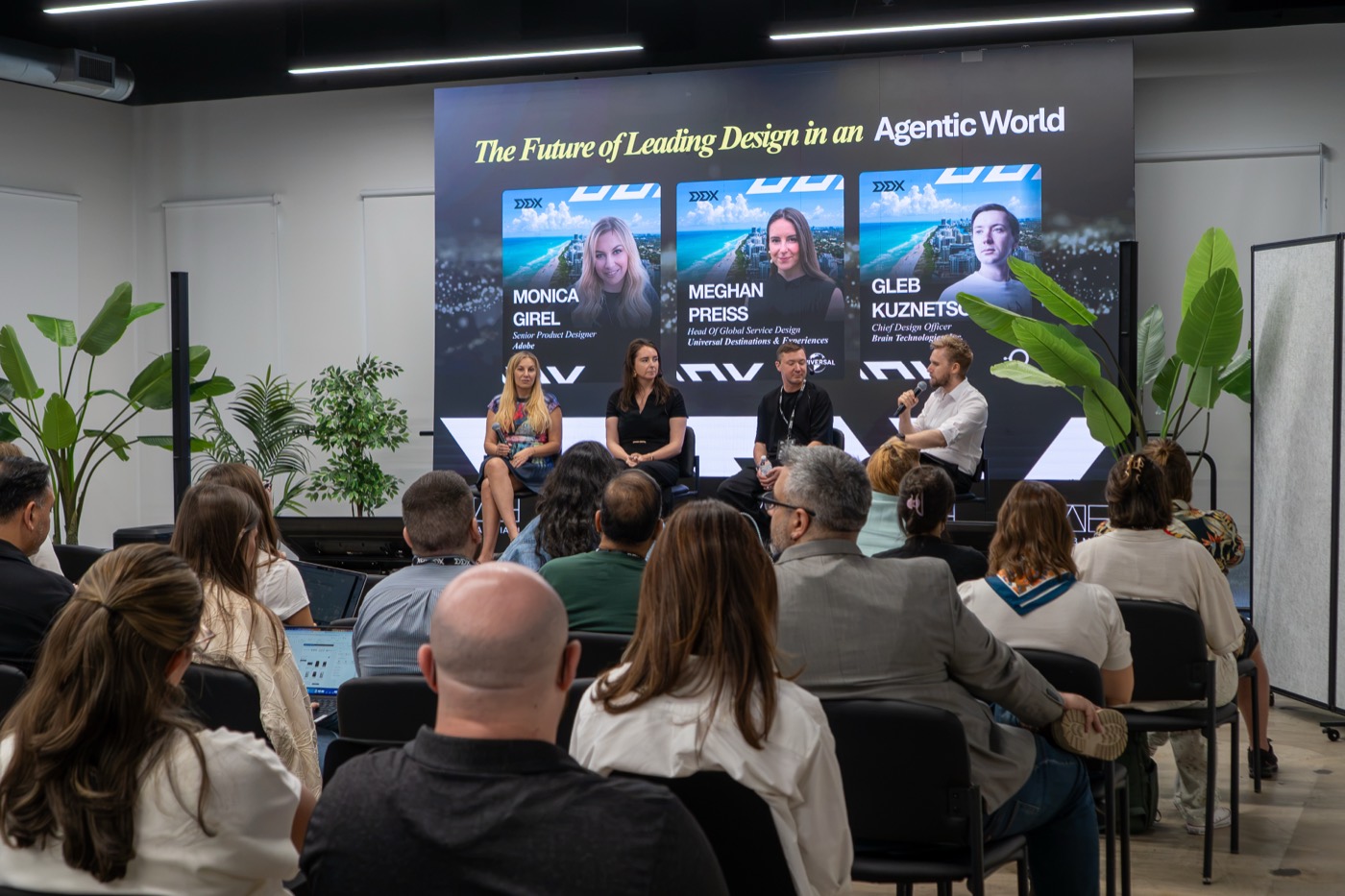
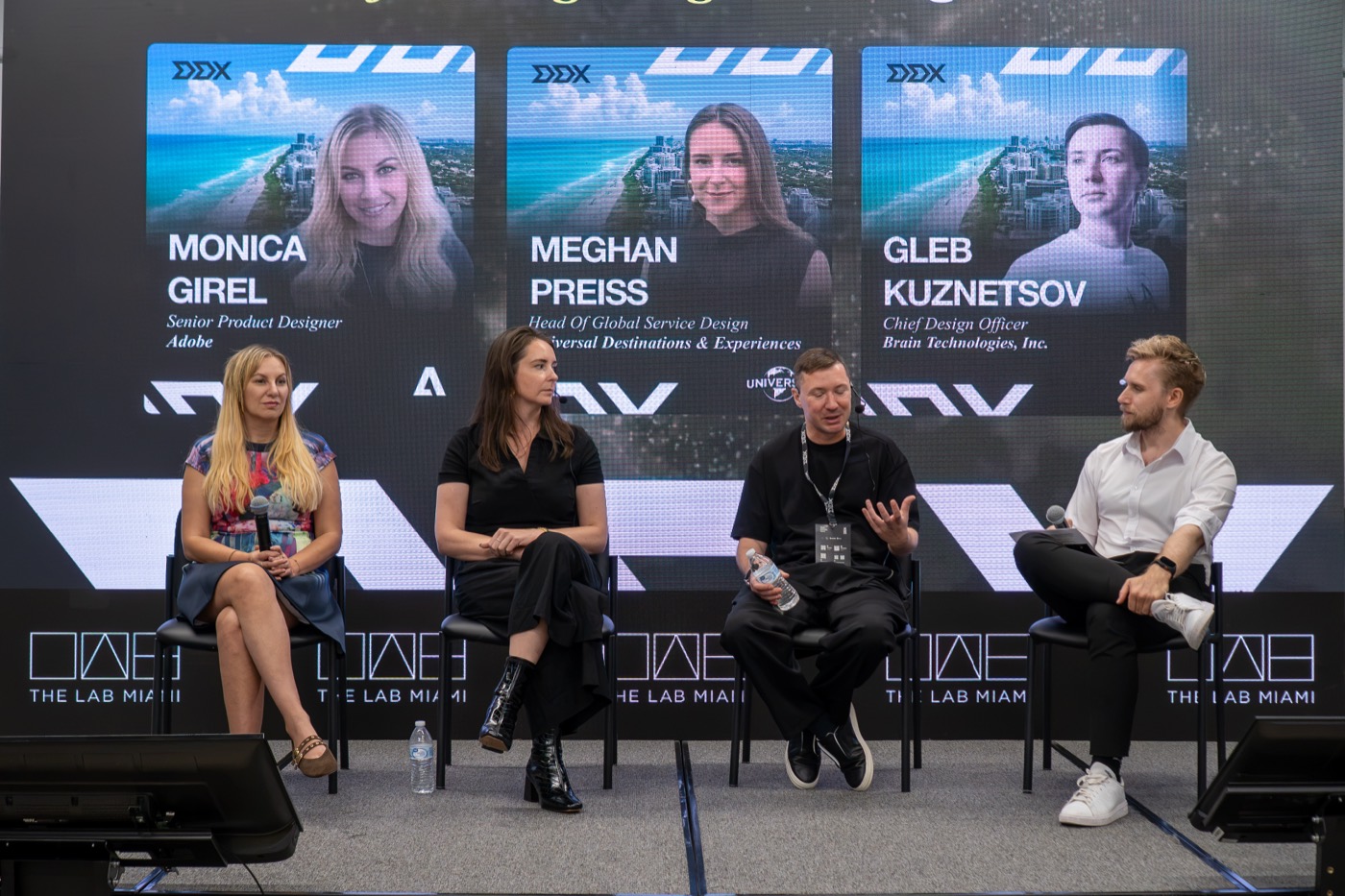
Cassie McDaniel’s talk gave the room permission it did not know it needed: you can make decisions without data. There are three sources of information that lead to product decisions, feels, reason and data, and a design team that only brings the third one is not in the room where the call is made. Monica Girel showed what that looks like in practice: information architecture still creates enormous value, but a static IA map no longer works for non-deterministic experiences, so she mapped a new framework for AI features that feel integrated with the product they live in. On the agentic-design panel with Gleb Kuznetsov, moderated by Sebastian Gier, the same point came back as a leadership question: who is allowed to say yes.

Six months with an agent: detach, focus, align, delegate, audit.

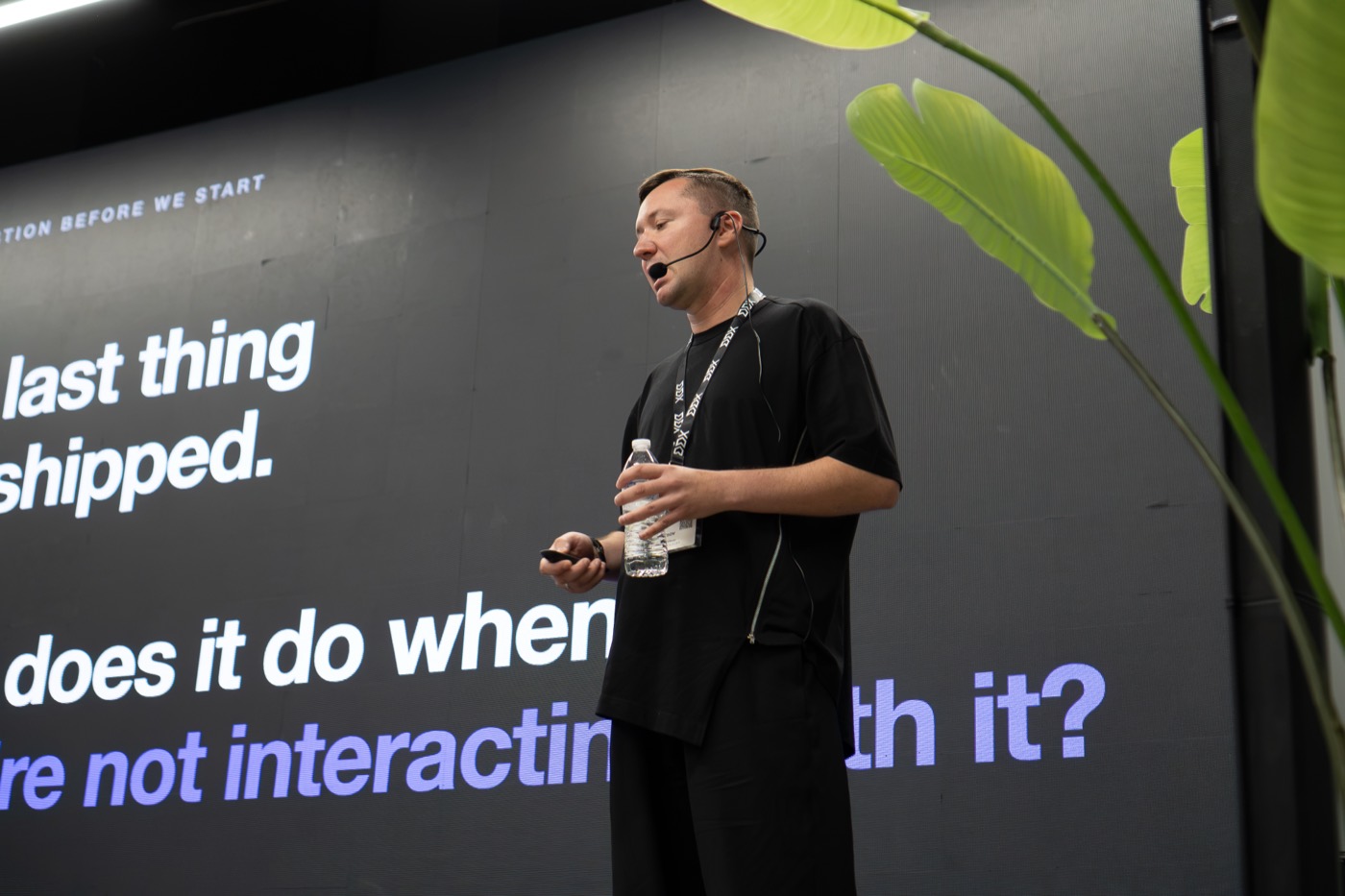
Sures Kumar handed an AI agent his calendar, fifteen years of email, ten years of transactions, his journals and his lab results, and reported back. Some of it worked better than expected; some of it he took back, and every failure fell into one of three buckets: the agent was missing context it was never given, the information could not be captured, or it had everything and still reasoned badly. His five-step process for using agents safely, at work and at home, was the most photographed slide of the day. Gleb Kuznetsov closed the stage with the harder version of the question: the last thing you shipped, what does it do when nobody is interacting with it?

The best design system is one AI can’t forget to use.

Ivan Barriga’s workshop introduced the Design Genome: design systems evolving from passive documentation into living infrastructure that both humans and AI can read, so generative tools inherit a company’s design language by default instead of being told the rules with every prompt. Jonathan Ruiz, who runs the team behind Ink at Docusign, framed the same shift as a management problem: the future of design is less about the tools than the systems that keep AI-assisted work consistent, coherent and human at scale. Dianne Alter called the designers who will win the ones who embrace orchestration, feeding the right context and taste into an AI to build the right thing instead of the generic thing.

Research at the scale of the business, judgment in the loop.

Elizabeth Reme is the sole researcher across American Express’s customer-service ecosystem, and her workshop walked through the GenAI-assisted synthesis pipeline she built to process more than 200,000 open-ended responses a quarter at zero extra tooling cost. Attendees sorted a sample by hand, compared their groupings with an AI pass, and found the costly failure mode: feedback that sounds identical but points to different root causes. Liz Steelman’s MCP roundtable turned tool-connected research queries into a card game; Coral Miniel’s table asked how to keep human judgment at the centre once prototypes arrive faster than understanding. The closing panel, More Human, Not Less, gave the day its verdict.

From the decksSlides the room photographed, reset in type

Seven slides worth keeping

Individually better.
Collectively the same.

Meghan Preiss · Personal Isn’t Human · slide 27 of 111

Let the machines be personal.
Let people be human.

Meghan Preiss · Personal Isn’t Human · slide 94

You can make decisions without data.

  1. Feels
  2. Reason
  3. Data
Cassie McDaniel · Feel It: Why Design Should Be Closer to Decision-Making
  1. Detach Don’t give it a name. You keep auditing something instead of trusting someone.
  2. Focus Start with one domain. Finances, then health, then people.
  3. Align Have long conversations with no task attached.
  4. Delegate Hand over only tasks you already know how to do.
  5. Audit Read its thinking trace as a habit, not an investigation.
Sures Kumar · Six Months of Giving an AI Agent My Whole Life · slide 34 of 35

Three questions for Monday

  1. Where are we resolving a tension we should hold?
  2. Who’s allowed to say yes?
  3. Where is the room?
Meghan Preiss · Personal Isn’t Human · slide 103

The last thing you shipped.
What does it do when we’re not interacting with it?

Gleb Kuznetsov · The Last Screen · a question before we start

The world is more designable than ever.

Mark Rolston
Sebastian Gier · Welcome · the line the day opened on

Slide text reproduced from the speakers’ decks as shared with DDX; layouts are the report’s, not the originals. Meghan Preiss also cited Doshi & Hauser (Science Advances, 2024): stories written with AI help were 10.7% more similar to each other than stories written without it.

In their wordsSpeakers on the future of innovation

Fifteen positions on the future

Innovation is moving from invention to orchestration. The next decade belongs to the people who can design how intelligence, infrastructure, and human judgment work together, because the hard part is no longer building the thing, it is making the thing hold across an entire system.
Meghan PreissHead of Global Service Design, Universal Destinations & Experiences · Talk “Personal Isn’t Human”
AI didn't replace the craft, it accelerated it. It also collapsed the cost of building tech products so dramatically that not building a feature is now a choice you have to defend, which leaves the harder question of what is worth building at all.
Sures KumarStaff Builder, Google DeepMind
No matter how much technology evolves and products change with AI, you cannot take human judgment out of the process. While AI can generate hundreds of ideas, it still takes humans to decide what works and what doesn’t.
Monica GirelSenior Product Designer, Adobe
Innovation is shifting from designing interfaces to designing intelligence. The next generation of digital products won’t be defined by pixels or apps, but by systems that understand intent, adapt in real time, and create deeply personal experiences.
Gleb KuznetsovChief Design Officer, Brain Technologies
The next wave of digital innovation isn't about AI replacing the researcher, it's about AI finally giving researchers the reach to listen at the scale their organizations operate at, while keeping human judgment as the layer that makes the output trustworthy enough to act on.
Elizabeth RemeSenior UX Researcher, American Express
The best design system in the AI era isn’t one people remember to use. It’s one AI can’t forget to use.
Ivan BarrigaHead of Product Design, FlavorCloud
The most exciting thing about this moment in design isn't the technology — it's that AI is forcing us to go back to first principles. The designers who thrive will be the ones who know why something should exist, not just how to make it.
Beto NavarroSenior Product Designer, Amazon · Founder, Friends of Figma Miami
The future of design is less about the tools we use and more about the systems we build to keep AI-assisted work consistent, coherent and human at scale.
Jonathan RuizSr. Manager, Product Design, Docusign
Designers that are winning in the future are the ones that embrace orchestration. That can feed the right context and taste into an AI to build the right thing instead of the generic thing. That designer judgement is the thing that cannot be automated.
Dianne AlterCo-founder and Head of Design, The Design Project
Design is shifting from creating standalone artifacts to architecting systems that amplify human capability and solve real problems.
Raul JustinianoSenior Director, Product Design, Asurion
AI is making products more capable faster than we've had to design for before, and that makes the work of making them understandable matter more, not less. The interesting part isn't what the technology can do, it's what people can actually follow and trust while using it.
Shaivi GanatraUser Experience Designer, Viveka Health · Friends of Figma Miami
The future of digital innovation isn’t about adding more technology, it’s about using technology to remove friction and create more meaningful human experiences. Our greatest responsibility as designers will be ensuring that what we build remains useful, inclusive, and distinctly human.
Jonathan MontalvoPrincipal Product Designer, Plei · Friends of Figma Miami
I believe the future of digital innovation belongs to teams that bring real customer evidence directly into how they strategize, design and build. By combining human insight with AI, organizations can move faster without losing sight of the people they’re creating for.
Liz SteelmanSenior Content Marketing Manager, Askable
AI can help us move faster, prototype faster, and explore more possibilities, but the best products will still come from understanding real people, their context, and the problems actually worth solving.
Coral MinielFounder, fixurfeed · Miami Tech Girl
AI is changing the way we create, but the future of creativity is still human. The most valuable skill will be knowing how to use new technology without losing your own ideas, vision and point of view.
Anastasiia LeliakovaFounder & Creative Director, Vegas Creative
The daysThursday 24 and Friday 25 September 2026 · Eastern time

The programme

Thursday · Pre-conference mixer · University of Miami

  1. Open doorsFrost Institute for Chemistry and Molecular Science, Coral Gables · in partnership with the University of Miami
  2. Welcome remarks & introductionsSebastian Gier
  3. Unlearn to Learn: Leadership in Disruptive TimesCassie McDaniel (Medium), Monica Girel (Adobe), Elizabeth Reme (American Express)Panel
  4. Drinks, light snacks & networking

Friday · Main Stage · The LAB Miami

  1. WelcomeSebastian Gier, DDX
  2. Personal Isn’t HumanMeghan Preiss, Universal Destinations & ExperiencesKeynote
  3. Feel It: Why Design Should Be Closer to Decision-MakingCassie McDaniel, MediumTalk
  4. The Future of Leading Design in an Agentic WorldMonica Girel, Meghan Preiss, Gleb Kuznetsov · moderated by Sebastian GierPanel
  5. Six Months of Giving an AI Agent My Whole LifeSures Kumar, Google DeepMindTalk
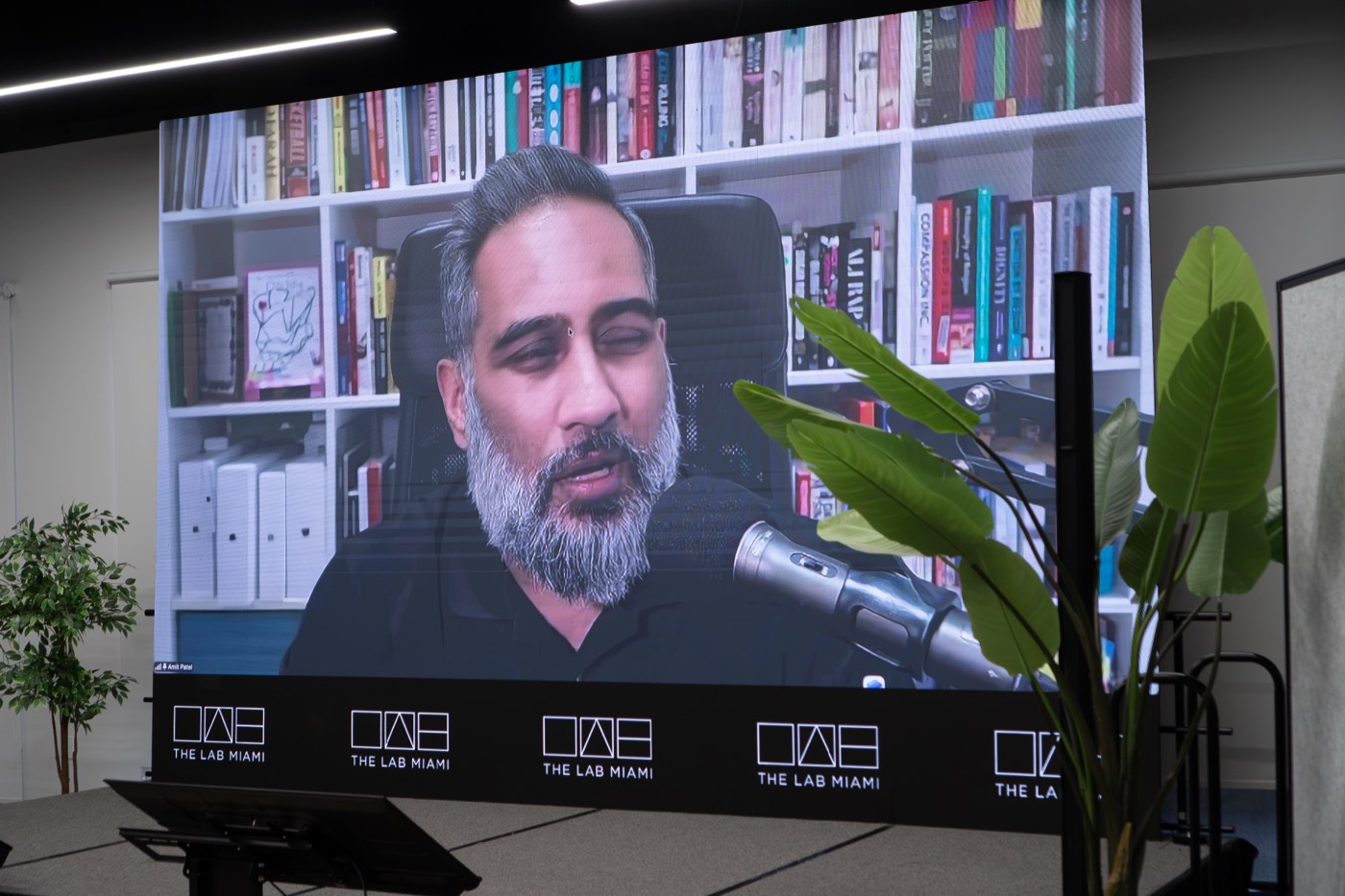
  6. A Global View of Design: Lessons from Events Around the WorldAmit Patel, Experience Haus · digital talk from LondonTalk
  7. From IA to AI and Back Again: A Framework for Mapping AI ExperiencesMonica Girel, AdobeTalk
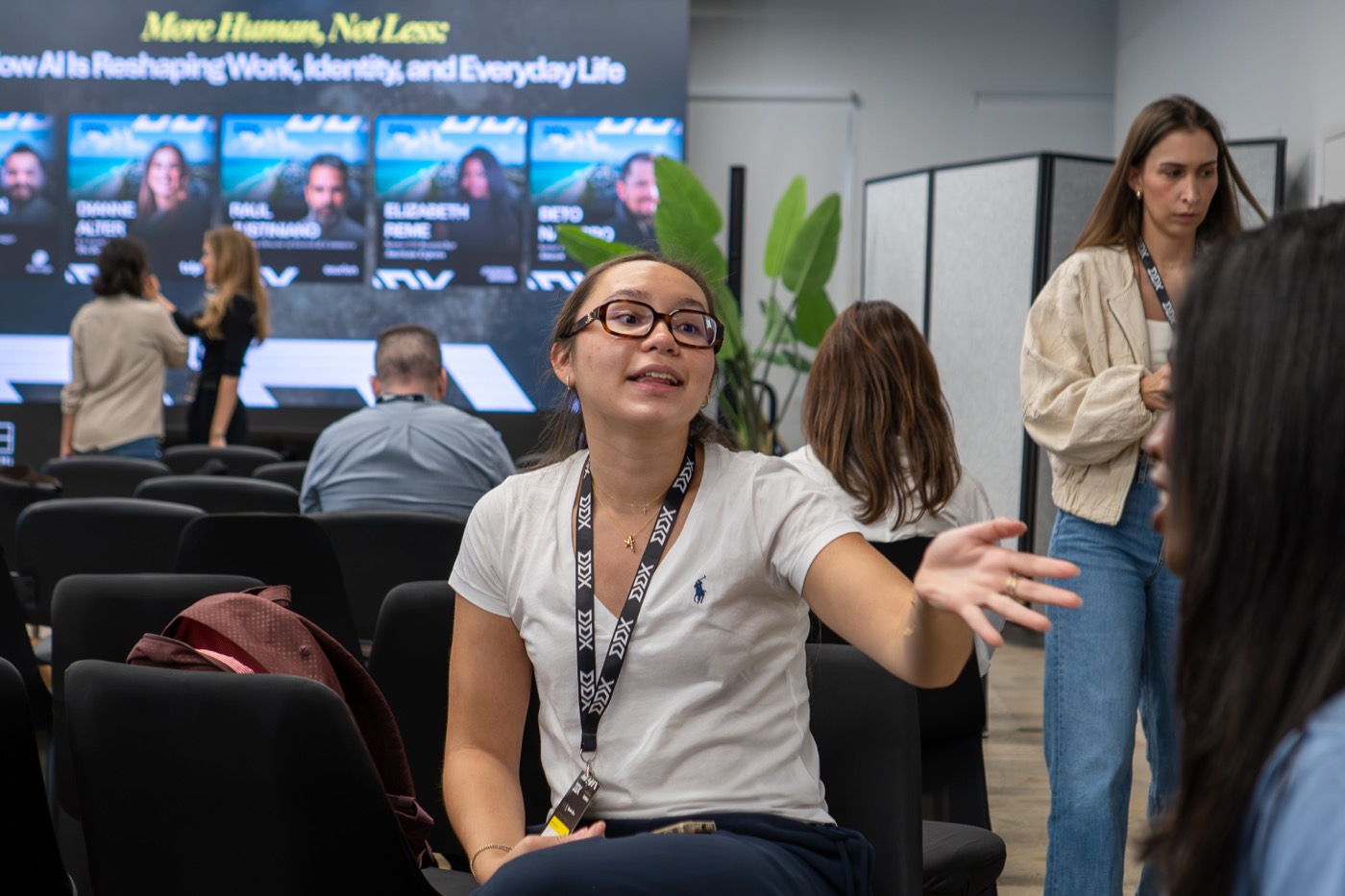
  8. More Human, Not Less: How AI Is Reshaping Work, Identity, and Everyday LifeDianne Alter, Raul Justiniano, Elizabeth Reme, Beto Navarro · moderated by Jonathan RuizPanel
  9. The Last ScreenGleb Kuznetsov, Brain TechnologiesKeynote
  10. Outro & outlookSebastian Gier · then the after-event

Friday · Workshop Space

  1. From Raw Data to Real Insights: A Working GenAI Pipeline for Turning Feedback Into ActionElizabeth Reme, American Express · 60 minutes, hands-onWorkshop
  2. The Design Genome: Building Design Systems for Humans and the AI EraIvan Barriga, FlavorCloud · 75 minutes, bring a laptopWorkshop
  3. After-eventFood, drinks & open networking at The LABAfter

Table talks in the breaks

  • Play Your Hand: An MCP Roundtable for Design, Product and InnovationLiz Steelman, Askable · 11:25
  • Human-Centered Design in the Age of AICoral Miniel, fixurfeed · 11:25
  • Six Months of Giving an AI Agent My Whole Life, continuedSures Kumar, Google DeepMind · 14:50
  • Where Do We Draw the Line? Designing with and for AI responsiblyShaivi Ganatra, Viveka Health & Jonathan Montalvo, Plei · 14:50
  • From User Flows to Agentic Workflows: What Changes When AI Becomes Part of the Team?Abhilash Kolapareddy, Citi · 16:45
  • From Brand Identity to Brand Experience: How AI Is Changing the Way We Build BrandsAnastasiia Leliakova, Vegas Creative · 16:45
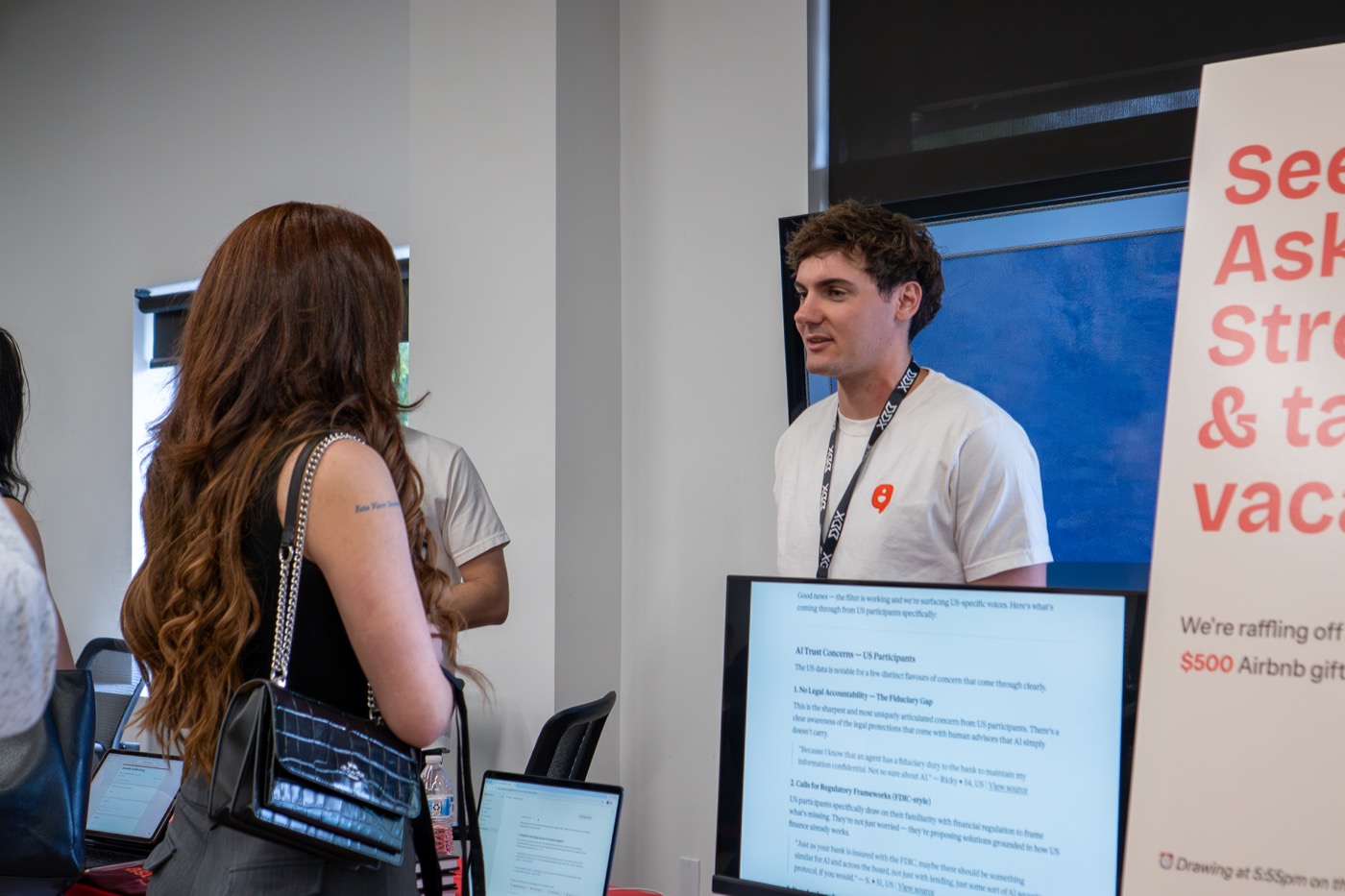
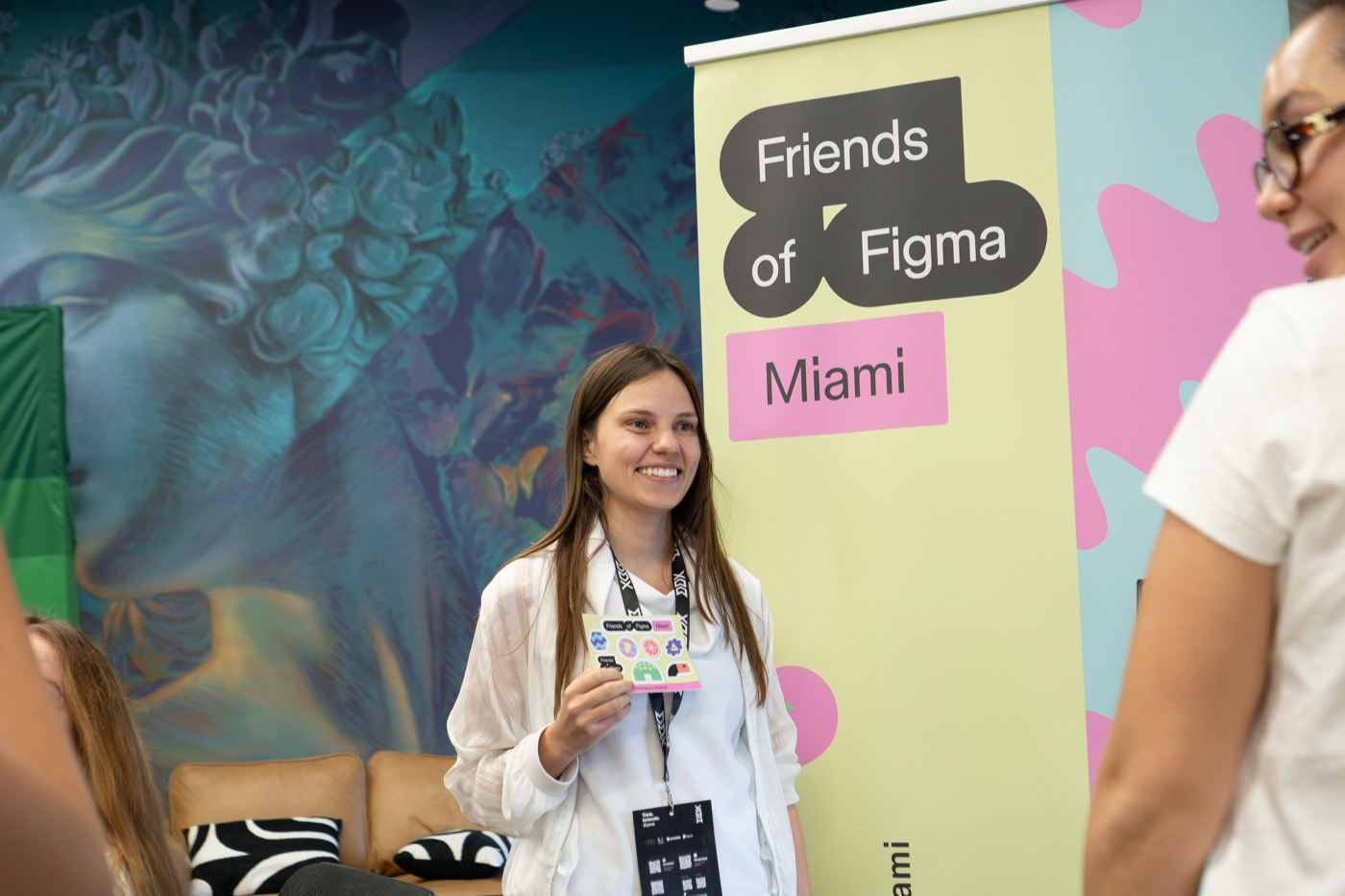
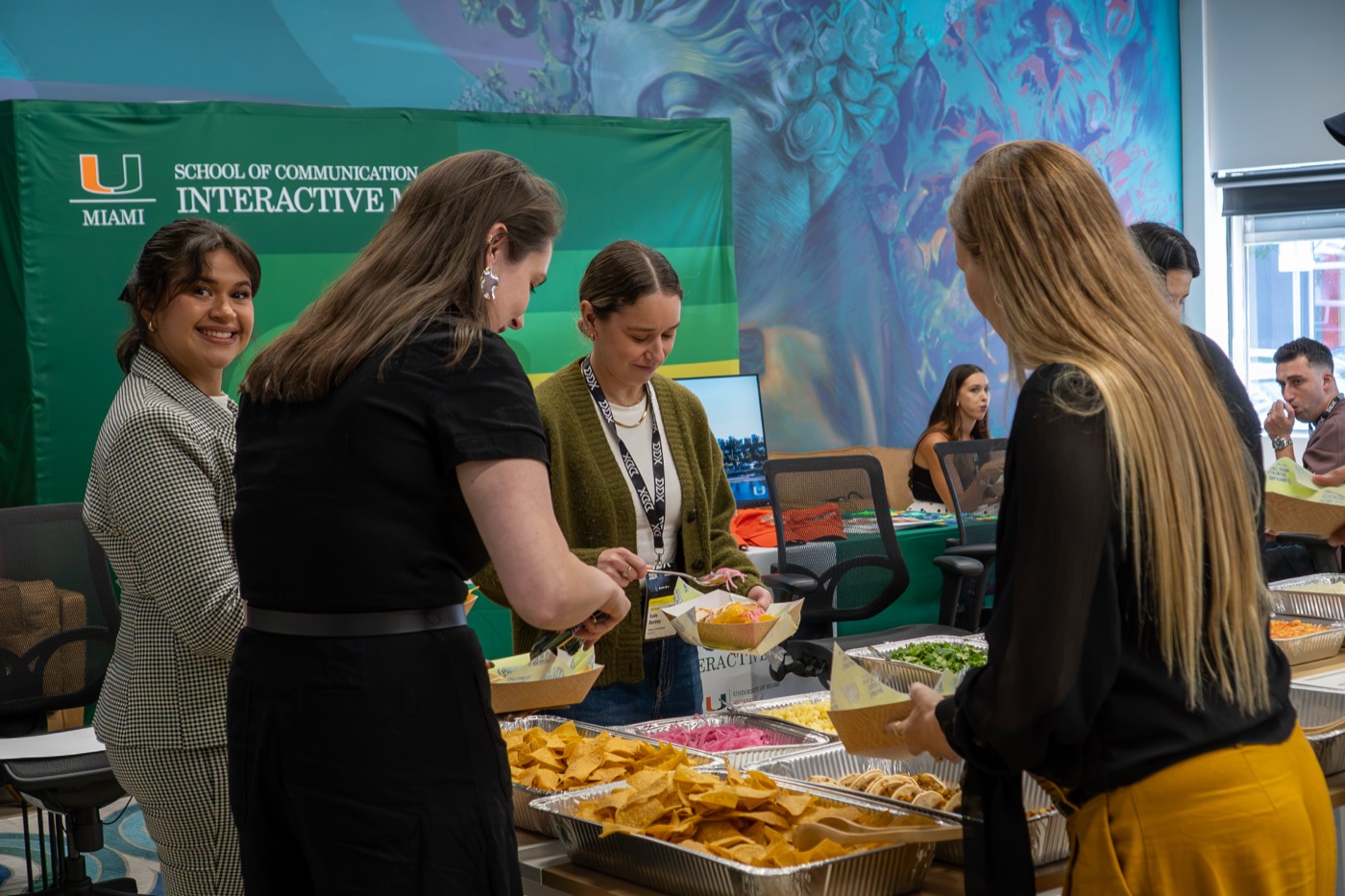
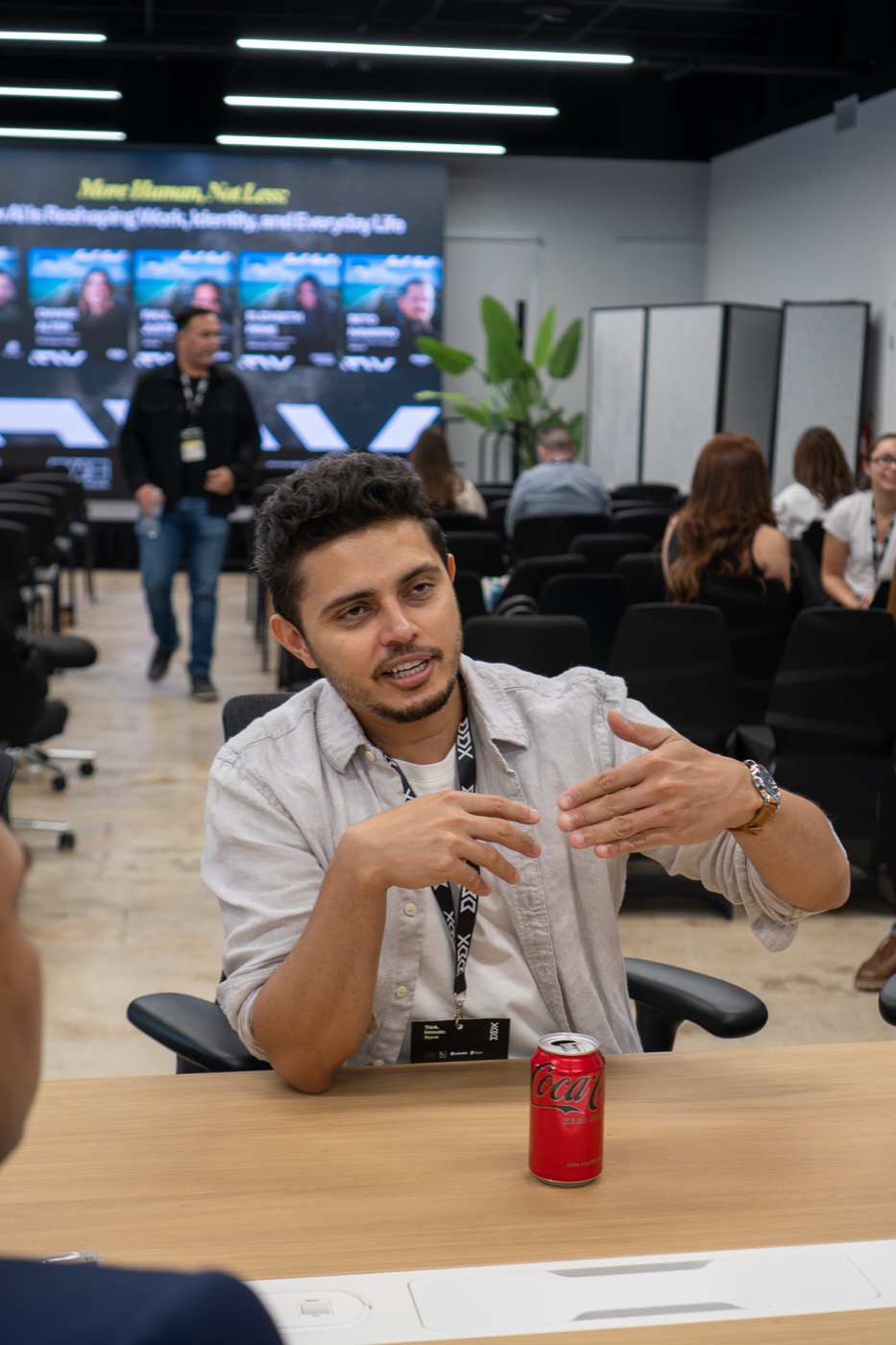
The roomFriday at The LAB Miami

Who was there, and what it looked like

PartnersThe people who made Miami possible

Made possible by

The series continues

Same exchange, next city

SourcesAll external figures published in 2026
  1. AnswerConnect / OnePoll, consumer survey of 6,000 adults in the US, UK and Canada, May 2026, as cited in Meghan Preiss’s talk. Klarna CEO quote via CX Dive, 2026, same deck.
  2. Designer Fund with Foundation Capital, AI in Design 2026: The Inflection Point Is Here, May 2026. 900+ designers, 60+ countries.
  3. Figma, Figma’s 2026 AI Report, June 2026. 8,403 survey responses and 639 interviews across 10 markets.
  4. Maze, The Future of User Research Report 2026, March 2026. Nearly 500 researchers, designers and product professionals.
  5. McKinsey & QuantumBlack, The State of AI in 2026: On the Road to ROI, August 2026. 1,719 respondents.
  6. Gartner, 50% of consumers prefer brands that avoid GenAI in consumer-facing content, March 2026.
  7. BCG, AI Radar 2026: As AI Investments Surge, CEOs Take the Lead, January 2026. 2,360 executives, 16 markets.
  8. Stanford HAI, The 2026 AI Index Report, April 2026.
  9. Menlo Ventures, 2026: The State of Consumer AI, September 2026. 5,067 US adults with Morning Consult.
  10. Programme, roles and titles as published at ddxconference.com/miami-agenda; speaker statements, bios and session descriptions from their DDX submissions; slide text from the decks shared with DDX after the conference.